Viscosity & Rheometric Properties
- Home
- /
- Working Domain
- /
- Physical Characterization
- /
- At Material Level
- /
- Viscosity & Rheometric Properties
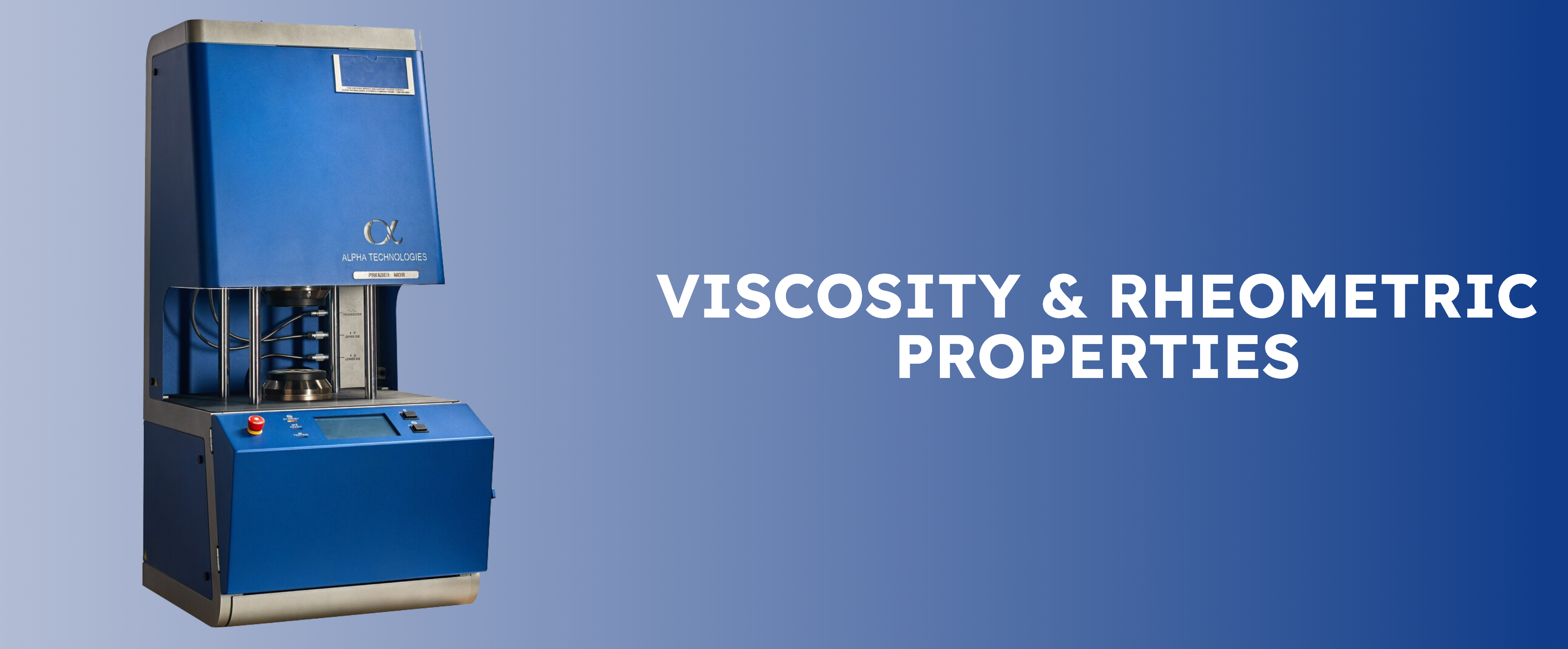
Viscosity and Rheometric Properties of Rubber
Rubber processability is largely dependent on its viscosity parameter. Viscosity of elastomeric material can be defined as inverse of its plasticity or simply resistance to flow. Viscosity is dependent on temperature and its molecular weight and its distribution. The most commonly used method is Mooney viscosity determination. Tests are carried out on Mooney rotating disc viscometer. Torque is measured on axis of the shearing disc.
In addition to Mooney viscosity, the measurement may also indicate Delta Mooney, scorching and stress relaxation. Delta Mooney (rubber processability characteristics) is the difference between two Mooney viscosity values measured in two time intervals at preset temperature. Delta Mooney (ΔM) is defined as between the viscosities measured in minute 15 and in minute 1.5 from the rotor start. Stress relaxation test may determine elastic and structural-viscosity properties of rubber. Relaxation is determined as following: after viscosity measurement has been completed, residual torque (viscosity) is measured on switched-off rotor in second 30 and 60.
Another important parameter for prediction of processability is its Rheo characteristics. It enables a compounder to select correct curing package for a compound.
Standard :
Mooney & MS: ASTM D1646, ISO289
Delta Mooney: ASTM D3346
Rheometric Properties: ASTM D5289, ISO6502
Highlights
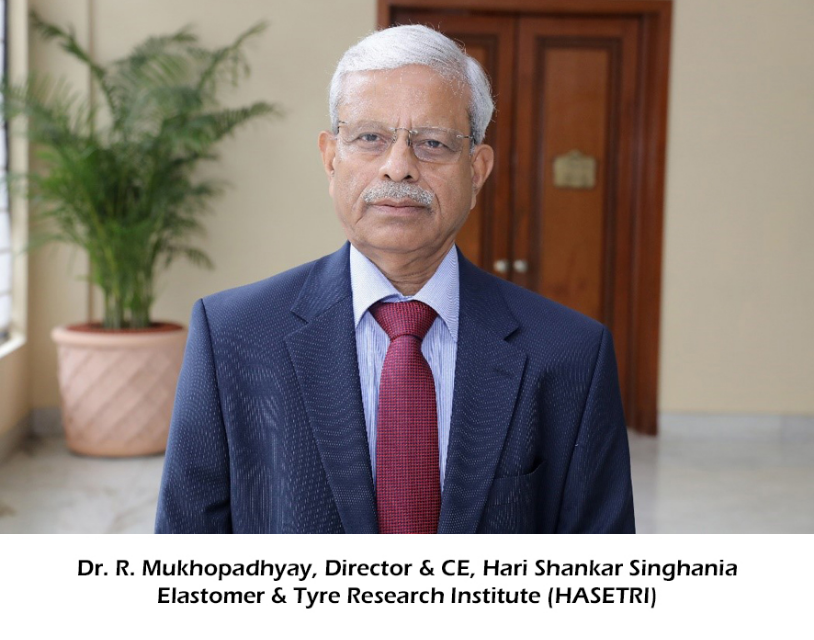
HASETRI featured in Indian/International Rubber Journal
An enlightening interview with Dr. R. Mukhopadhyay, Director & CE, HASETRI, speaks of the current situation of the Indian tire and rubber industry and how they are coping with the pandemic.

HASETRI successfully enhanced the scope of NABL accreditation
September 2021: HASETRI has successfully enhanced the scope of NABL accreditation in Wet Grip and Coast by Noise testing for Cl & C2 category tyres as per ECE R117 and proposed AIS 142.
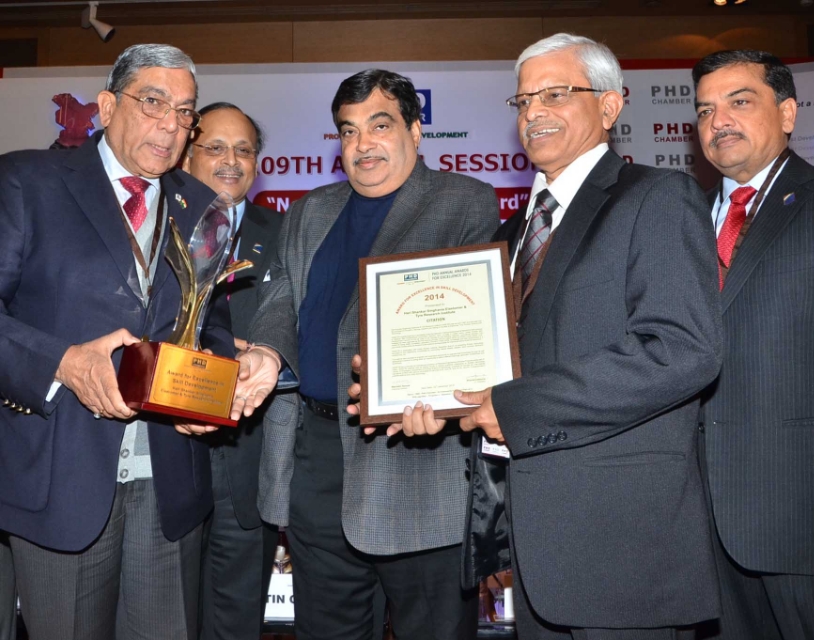
PHD Annual Awards for Excellence Announced
HASETRI imparted training to candidates under the STAR scheme of NSDC,GOI in rubber sector(under Rubber SDC)for the job roles of mill & Tyre Building Operator-commercial vehicles. The Institute has been approved as the first training provider for rubber sector by RSDC under NSDC,GOI
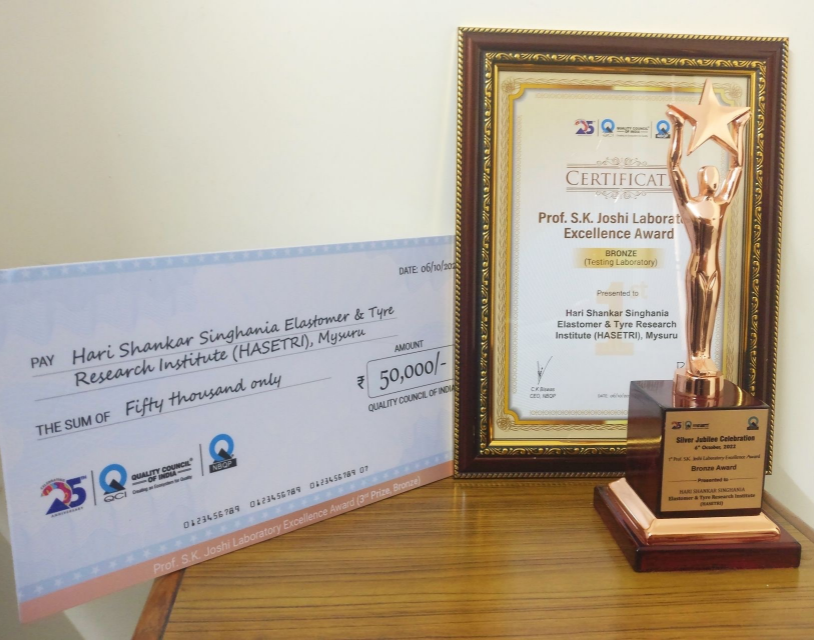
HASETRI receives the Prof. SK Joshi Laboratory Excellence Award
HASETRI received Prof. SK Joshi Laboratory Excellence Award from Quality Council of India (QCI) during their Silver Jubilee celebration held on 6th October 2022 at New Delhi. This is the first testing laboratory in private sector in India to receive this Award.

Elastomer And Tyre Research Institute