Vehicle Dynamics & Noise Vibration Engineering
- Home
- /
- Working Domain
- /
- Vehicle Dynamics & Noise...
Vehicle Dynamics Testing & Performance Evaluation Services at HASETRI
Vehicle dynamics refers to how a vehicle moves and responds to driver inputs and road conditions. It affects handling, stability, ride comfort, braking and safety. Because tyres are the only contact point between the vehicle and the road, therefore accurate vehicle dynamics testing is essential for both tyre manufacturers and automotive OEMs.
Vehicle dynamics testing helps measure forces, motion, vibration and stability under pre-defined conditions. This data is used to improve vehicle performance, validate tyre behaviour, and support regulatory and development requirements. Testing performed through an NABL accredited testing laboratory also helps engineers ensure accuracy, repeatability, and compliance with recognised testing standards during real driving conditions.
At HASETRI, vehicle dynamics testing supports tyre development, vehicle validation, and research programs. These tests help manufacturers and OEMs verify performance, reduce design risks, and improve overall vehicle behaviour.
HASETRI is a NABL-accredited testing laboratory, ensuring that all vehicle dynamics test results meet nationally and internationally recognised standards of accuracy and reliability.
Understanding More about Vehicle Dynamics Testing and Its Importance
Vehicle dynamics testing measures how a vehicle responds to steering, braking, acceleration, and road inputs. It helps engineers understand stability, grip, and ride behaviour.
The fundamentals of vehicle dynamics focus on how forces act on the vehicle. These include longitudinal forces during acceleration and braking, lateral forces during cornering, and vertical forces from road surfaces. When you measure these forces, it becomes easier to identify performance limits and improvement areas.
5 Ways Vehicle Dynamics Testing Improves Vehicle Performance:
- ● Improve vehicle stability and handling. Testing identifies how a vehicle responds to steering inputs and road surfaces, helping engineers fine-tune suspension and tyre settings for consistent, predictable handling across different driving conditions.
- ● Validate tyre performance under real conditions. Vehicle dynamics testing confirms how tyres behave under actual load, speed, and road surface variations. This data directly supports tyre testing lab processes, giving tyre manufacturers and OEMs reliable results before production sign-off.
- ● Reduce noise, vibration, and harshness (NVH). Measuring noise levels and vibration frequencies during testing helps engineers identify problem areas in tyre and chassis design, leading to a quieter and more comfortable vehicle experience.
- ● Improve safety during braking and cornering. Testing captures braking distances, lateral forces, and cornering stability under controlled conditions, giving engineers the data needed to meet safety requirements and reduce the risk of vehicle instability.
- ● Support vehicle design and development decisions. Accurate test data removes guesswork from the development process, allowing design teams to make informed changes to tyre geometry, suspension setup, and chassis configuration with measurable results.
Without proper testing, it is difficult to predict how a vehicle will behave in different conditions.
Standard Vehicle Dynamics Testing Methods and Protocols
Vehicle dynamics testing follows defined procedures to ensure results are accurate and repeatable. These methods are used during tyre development, vehicle validation, and research work.
Vehicle dynamics testing follows defined procedures to ensure results are accurate and repeatable. These methods are used during tyre development, vehicle validation, and research work.
5 Primary Vehicle Dynamics Testing Methods Used by Our Engineers:
- ● Force and moment measurement to evaluate tyre forces. This method measures lateral, longitudinal, and vertical forces generated at the tyre contact patch, helping engineers understand how tyres perform under varying load, speed, and surface conditions.
- ● Steering response testing to measure handling behaviour. Evaluates how a vehicle responds to steering inputs at different speeds, capturing data on yaw rate, lateral acceleration, and understeer or oversteer characteristics for objective handling assessment.
- ● Braking and acceleration testing to assess stability. Records vehicle behaviour during rapid deceleration and acceleration events, measuring stopping distances, wheel slip, and directional stability under both straight-line and cornering conditions.
- ● Ride comfort and vibration measurement. Captures the frequency and amplitude of vibrations transmitted through the tyre and suspension to the vehicle body, helping engineers reduce harshness and improve overall ride quality.
- ● Pass-by noise and NVH testing. Measures external noise generated as a vehicle travels past a fixed point and evaluates internal cabin noise, helping manufacturers meet regulatory noise limits and improve passenger comfort.
These tests are performed using sensors, measurement systems, and controlled test environments. Results are analysed to understand vehicle behaviour and identify areas for improvement. This helps engineers predict performance before physical testing. Simulation and physical testing are often used together to improve accuracy and development speed.
Vehicle Dynamics Testing Equipment and Measurement Systems
Vehicle dynamics testing depends on accurate measurement systems. These systems record how the vehicle and tyres behave under different operating conditions.
Here Are the 5 Main Equipment Used in Vehicle Dynamics Testing:
- ● Force and moment sensors to measure tyre forces. Mounted at the wheel hub or contact patch, these sensors capture lateral, longitudinal, and aligning forces during cornering, braking, and acceleration, providing precise data for tyre performance analysis.
- ● Accelerometers to measure vibration and motion. Attached to the vehicle body, suspension, and chassis to record vibration levels and motion patterns, helping engineers identify resonance frequencies and sources of noise and harshness during testing.
- ● Speed and position sensors to track vehicle movement. Monitor vehicle speed, yaw rate, and lateral position throughout the test run, ensuring accurate data collection for handling analysis and comparison against defined performance benchmarks.
- ● Steering angle sensors to measure steering input. Record the angle and rate of steering inputs during test manoeuvres, allowing engineers to correlate driver inputs with vehicle response for objective and repeatable handling evaluation.
- ● Data acquisition systems to record and analyse results. Capture and synchronise data from all connected sensors in real time, enabling engineers to review, compare, and analyse vehicle behaviour consistently across multiple test runs.
These systems work together to capture detailed performance data. Engineers use this data to understand vehicle response during braking, acceleration, and cornering. Accurate measurement also supports the development of a vehicle dynamics model. These models use real test data to simulate vehicle behaviour, helping engineers predict performance and reduce development time. Calibration and proper setup of equipment are important. Incorrect measurement can lead to wrong conclusions and design errors. Accredited testing facilities follow defined calibration procedures to maintain accuracy.
Vehicle Dynamics Testing for Tyres, Suspension, and Chassis Systems
Vehicle dynamics testing helps evaluate the interaction between tyres, suspension, and chassis components. Each of these systems affects how the vehicle responds to road and driver inputs.
For tyres, vehicle dynamics testing helps measure:
- ● Grip and traction performance
- ● Rolling resistance and efficiency
- ● Force and moment characteristics
- ● Noise and vibration behaviour
- ● Steering response and handling
For Suspension Systems:
- ● Ride comfort and stability
- ● Shock absorber and damping performance
- ● Load transfer behaviour
For Chassis Systems:
- ● Vehicle stability and control
- ● Steering response and handling
- ● Structural behaviour under load
These measurements help engineers optimise design and improve overall vehicle performance.
Applications of Vehicle Dynamics Testing Across Automotive Segments
Vehicle dynamics testing is used across different vehicle types and industries. Each segment has specific performance and safety requirements.
Passenger vehicles use vehicle dynamics testing to improve comfort, handling, and safety. Commercial vehicles rely on testing to ensure stability under heavy loads and for longer operating cycles.
Two-wheelers and off-highway vehicles also use vehicle dynamics testing to improve control and durability.
Vehicle dynamics testing is also used in research, product development, and regulatory validation. It helps ensure that vehicles and tyres meet performance expectations and safety requirements.
Each automotive segment brings a different set of testing requirements. Passenger car manufacturers focus on ride quality, steering precision, and low NVH levels. Commercial vehicle manufacturers prioritise load stability, braking performance, and structural durability. Two-wheeler manufacturers require testing for lateral dynamics and low-speed manoeuvring behaviour. Off-highway and construction vehicle manufacturers need data on terrain response and vibration management under extreme operating conditions. HASETRI supports all these segments through a combination of indoor laboratory testing and outdoor field evaluation, providing segment-specific test programs tailored to each client's development and validation requirements.
Role of Vehicle Dynamics Testing in Product Development and Validation
Vehicle dynamics testing is an important part of product development. It helps engineers confirm that tyres and vehicles perform as expected before production.
During development, testing helps identify issues early. Engineers can Optimise tyre design, suspension settings, or vehicle parameters based on test results. This improves performance and reduces the risk of failures after launch.
Vehicle dynamics testing also supports validation and certification. Many manufacturers must demonstrate that vehicles meet safety and performance requirements. Test data provides evidence that these requirements are met.
Testing also helps improve efficiency. For example, rolling resistance and force measurements help improve fuel efficiency and reduce energy loss.
Indoor and Outdoor Vehicle Dynamics Testing
This group uses experimental methods to identify tyre noise, vibration, modal frequencies, forces and moments. It enables to attempt a wide range of automotive problems, viz. vehicle dynamics, identification of noise source. This group focuses on the following:
Indoor Testing:
Indoor testing includes tyre modal analysis, force and moment characterization and measurement of radiating tyre noise using semi-anechoic chamber. Materials used in vibration damping and noise reduction are also evaluated through our elastomer testing services for comprehensive NVH assessment.

Outdoor Testing:
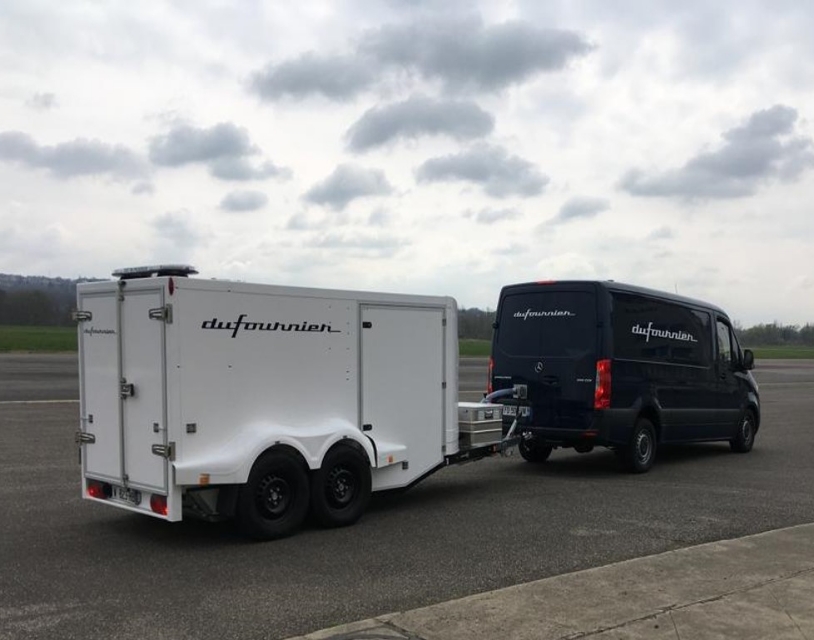
Outdoor testing includes pass by & interior noise measurement on field test e.g. Test track and Ride and Handling test generates Mimuro plot for characterizing vehicle handling parameters
- Pass by & Interior noise
- Ride Comfort & Handling
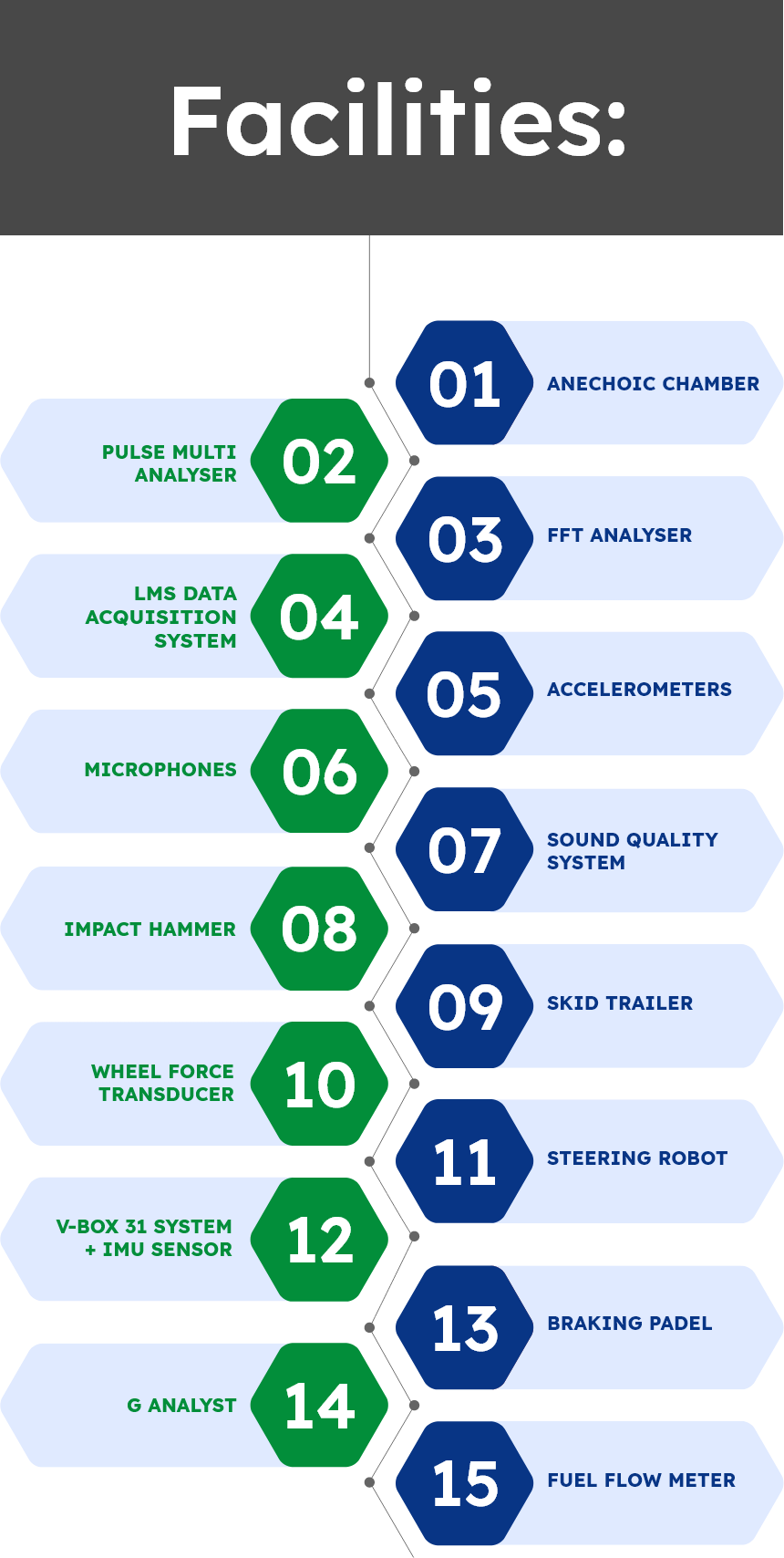
- Capabilities: -
HASETRI has demonstrated continued advancement in NVH & Vehicle dynamics testing facilities and team knowledge to address the current & future requirement of our customer from wide range of industries including automobile, locomotive, tyre, component manufacturer & white-good.
Indoor Testing


Outdoor Testing


Frequently Asked Questions
What is vehicle dynamics testing?
Vehicle dynamics testing measures how a vehicle responds to driver inputs such as steering, braking, and acceleration.
Why is vehicle dynamics testing important?
It helps improve vehicle safety, stability, handling, and ride comfort.
What systems are evaluated during vehicle dynamics testing?
Testing evaluates tyres and vehicle behaviour.
How is a vehicle dynamics model used?
A vehicle dynamics model helps simulate vehicle behaviour and supports development and testing work.
What equipment is used in vehicle dynamics testing?
Vehicle dynamics testing uses force sensors, accelerometers, steering angle sensors, speed sensors, and data acquisition systems to measure tyre forces, vehicle motion, braking behaviour, vibration, and handling performance accurately.
Which industries benefit from vehicle dynamics testing?
Vehicle dynamics testing supports automotive OEMs, tyre manufacturers, commercial vehicle companies, two-wheeler manufacturers, motorsports teams, and research organisations by improving vehicle safety, handling, ride quality, and performance validation.
Highlights

HASETRI featured in Indian/International Rubber Journal
An enlightening interview with Dr. R. Mukhopadhyay, Director & CE, HASETRI, speaks of the current situation of the Indian tire and rubber industry and how they are coping with the pandemic.
HASETRI successfully enhanced the scope of NABL accreditation
September 2021: HASETRI has successfully enhanced the scope of NABL accreditation in Wet Grip and Coast by Noise testing for Cl & C2 category tyres as per ECE R117 and proposed AIS 142.

PHD Annual Awards for Excellence Announced
HASETRI imparted training to candidates under the STAR scheme of NSDC,GOI in rubber sector(under Rubber SDC)for the job roles of mill & Tyre Building Operator-commercial vehicles. The Institute has been approved as the first training provider for rubber sector by RSDC under NSDC,GOI
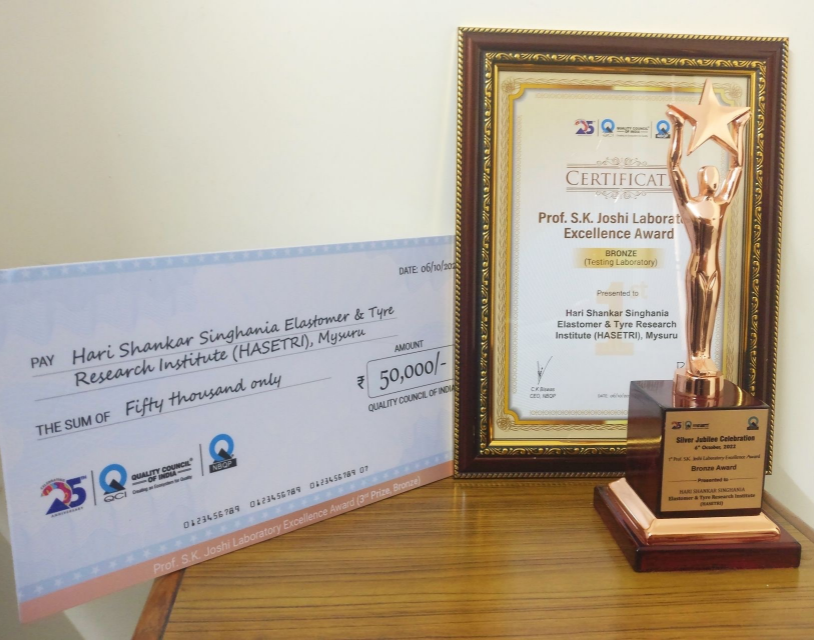
HASETRI receives the Prof. SK Joshi Laboratory Excellence Award
HASETRI received Prof. SK Joshi Laboratory Excellence Award from Quality Council of India (QCI) during their Silver Jubilee celebration held on 6th October 2022 at New Delhi. This is the first testing laboratory in private sector in India to receive this Award.

Elastomer And Tyre Research Institute