NABL Lab
- Home
- /
- NABL Lab
NABL Accredited Testing Laboratory Services
A NABL lab is a laboratory that has been accredited by the National Accreditation Board for Testing and Calibration Laboratories (NABL). This accreditation confirms that the lab follows recognized quality systems and approved testing or calibration methods. It also means that test results from the lab are trusted by regulators, auditors, and customers.
Many facility heads might search for a NABL lab near me whenever they look to find reliable testing or calibration support. Accreditation reduces risk and helps ensure that measurements are accurate and repeatable. This is important for manufacturing plants, in-house labs, product developers, certification agencies, and government bodies.
A NABL accredited lab follows ISO/IEC 17025 standards. This provides confidence that the facility is competent, traceable, and audit-ready. Because of this, accredited labs are often listed in the list of NABL accredited labs maintained by the authority and are recognized across India and in many international programs.
For industries where measurement accuracy directly impacts compliance, the choice of testing partner matters. HASETRI operates as a NABL accredited facility, delivering testing and calibration services that are traceable, documented, and built to support audit and regulatory requirements.
What Is a NABL Lab and Why Accreditation Matters
Across India, a testing or calibration facility that has received official evaluations from NABL, along with the required approvals is known as a NABL lab. This is a process that checks technical capability, quality systems, documentation, staff competence, and test method validation.
In simple terms, the standard NABL accreditation entails the following:
- ● A lab that follows strictly defined procedures
- ● Measurements that are both traceable and documented
- ● Instruments that are both calibrated and maintained
- ● Results that are both repeatable and technically valid
Without the stringent process of accreditation, most industries find no formal assurance of whether testing or calibration work is done right. Accreditation matters because many industries depend on accurate measurement. This includes automotive, rubber, polymer, manufacturing, healthcare, government, and research. Whenever test and calibration results are sourced from a NABL accredited lab, people find them easier to accept, especially during audits, certifications, regulatory processes, etc.
For users searching for NABL accredited labs near me, accreditation reduces doubt. It confirms that the lab has been assessed by an independent authority and is working to international standards.
Industries working with rubber materials rely on accredited facilities for consistent and reliable results. A dedicated rubber testing lab operating under NABL accreditation ensures that every test follows validated methods, traceable instruments, and documented procedures that hold up during audits and technical reviews.
Advantages of Partnering with a NABL Accredited Lab
Working with a NABL lab helps remove uncertainty from testing and calibration work. It ensures that results are generated under controlled systems and verified methods. This improves reliability and reduces the chance of disputes during audits or approvals.
Key advantages include:
- ● Trusted test results: Accepted by customers, auditors, regulators, and certification bodies.
- ● Compliance with ISO/IEC 17025: The lab follows international standards for competence and quality.
- ● Strong measurement traceability: Instruments and systems are calibrated and documented.
- ● Lower risk of error: Thanks to defined processes and regular quality checks.
How NABL Accreditation Supports Industry and Compliance
Many industries depend on accurate test and calibration results. A NABL lab supports this need by following approved methods and verified quality systems. This helps companies maintain compliance with customer requirements, technical standards, and regulatory bodies.
Common sectors that rely on NABL accredited labs include:
- ● automotive and tyre manufacturing.
- ● rubber and polymer processing.
- ● metal, chemical, and industrial goods.
- ● healthcare and diagnostics.
- ● research and academic institutions.
For these users, unreliable data can create real risk. It may lead to product failures, audit findings, or rejection of certification. Reports from a NABL accredited lab reduce this risk. They provide documented traceability and technical assurance that results can be trusted.
This also comes in handy for export documentation and supplier qualification. When results originate from a NABL lab, it becomes easier to demonstrate compliance during inspections and technical reviews. This is why many organizations prefer working only with accredited facilities instead of unverified test centers.
In the automotive and tyre sector specifically, accredited test data plays a direct role in vehicle dynamics programmes, supporting performance validation, regulatory submissions, and product approval processes.
Difference Between a NABL Lab and a Non-Accredited Lab
A NABL lab works under formal accreditation. A non-accredited lab does not.
In a NABL accredited lab:
Each method is validated:
Every test method used in a NABL lab goes through a formal validation process before it is applied to real samples. This confirms the method consistently produces accurate and technically defensible results.
Each instrument is calibrated and traceable:
All measuring instruments are calibrated at defined intervals against traceable national or international standards. This ensures every measurement taken in the lab is verifiable and accepted during audits or regulatory reviews.
Staff competence is evaluated strictly:
Personnel at a NABL accredited lab are assessed for technical knowledge, training background, and hands-on testing capability. Only qualified staff are authorized to carry out specific tests or calibration activities within the accredited scope.
Internal audits are regularly enforced:
Scheduled internal audits are conducted to verify that quality systems, documentation, and testing procedures are being followed correctly at all times. These audits identify and correct any deviations before they can affect the reliability of results.
Quality records are maintained:
Every test, calibration activity, instrument check, and corrective action is documented and stored within a controlled quality record system. This creates a clear, auditable trail that satisfies regulatory, certification, and customer requirements.
Performance is reviewed through proficiency testing:
NABL accredited labs participate in inter-laboratory proficiency testing programs regularly. This external benchmark confirms that the lab's results align with those from other accredited facilities, adding an independent layer of credibility to every report issued.
This difference matters during:
Customer audits:
Test reports from a NABL accredited lab are accepted by customers and auditors without additional scrutiny. Reports from non-accredited labs are frequently challenged, rejected, or sent for re-testing, leading to delays and added costs.
Regulatory inspections:
Government and regulatory bodies across automotive, rubber, polymer, and manufacturing sectors require test data from accredited sources only. A NABL lab ensures your reports meet compliance standards without any additional verification burden.
Certification programs:
Product certifications such as BIS, BEE, and automotive type approvals require test data submitted from recognized, accredited labs. NABL accreditation gives your test reports the formal standing needed for tyre certification applications to be processed smoothly.
Tender or supplier approvals:
Many OEMs, procurement departments, and large manufacturers list NABL accredited testing as a mandatory requirement in tender documents and supplier qualification processes. Working with a NABL accredited lab like HASETRI directly strengthens your position during competitive evaluations.
Quality Assurance and Validation Processes in a NABL Lab
A NABL accredited lab follows strict quality procedures. These systems ensure that every test or calibration activity is carried out in a consistent and controlled manner. Core quality practices include:
Documented procedures:
Every test method is defined, approved, and controlled.
Instrument calibration:
All equipment is calibrated at defined intervals with traceable references.
Staff competence and training:
Personnel are trained and authorized for specific tasks.
Internal audits and quality reviews:
The lab regularly checks its own systems to maintain compliance.
Proficiency testing and validation:
Labs take part in comparison studies to verify technical performance.
Record keeping and traceability:
Test reports, calibration certificates, and raw data are documented and retained.
Conclusion
A NABL lab plays a central role in safety, compliance, and product development. It supports manufacturers, OEMs, and material suppliers with reliable data for design decisions and regulatory approvals. Independent testing, standardised methods, and accredited systems reduce risk and improve confidence in results.
Contact HASETRI today for more information on accredited testing, calibration, and validation services. We are happy to support any compliance and quality assurance requirements you may have.
Frequently Asked Questions
What is a NABL lab?
A NABL lab refers to a laboratory that has been accredited by the National Accreditation Board for Testing and Calibration Laboratories for testing or calibration purposes.
So, what would be the significance of NABL accreditation?
NABL accreditation validates that the lab is in compliance with ISO/IEC 17025 and technically competent for testing or calibration.
What is the preferred way to find the nearest NABL accredited labs in my area?
The official list of NABL accredited labs can be searched online. Additionally, facilities may be contacted directly.
What are the benefits of NABL accreditation?
NABL accreditation demonstrates that a laboratory meets stringent quality and technical standards. At Hasetri, NABL-accredited testing ensures accurate results, reliable processes, enhanced credibility, and compliance with industry and regulatory requirements.
Will NABL lab reports be accepted during audits?
Yes, reports from accredited labs are widely accepted by regulators, customers, and certification bodies.
Is NABL certification mandatory?
NABL certification is not mandatory for all laboratories. However, it is widely recognised as a benchmark of quality and competence, helping laboratories build trust, meet industry expectations, and improve acceptance of test results.
Highlights
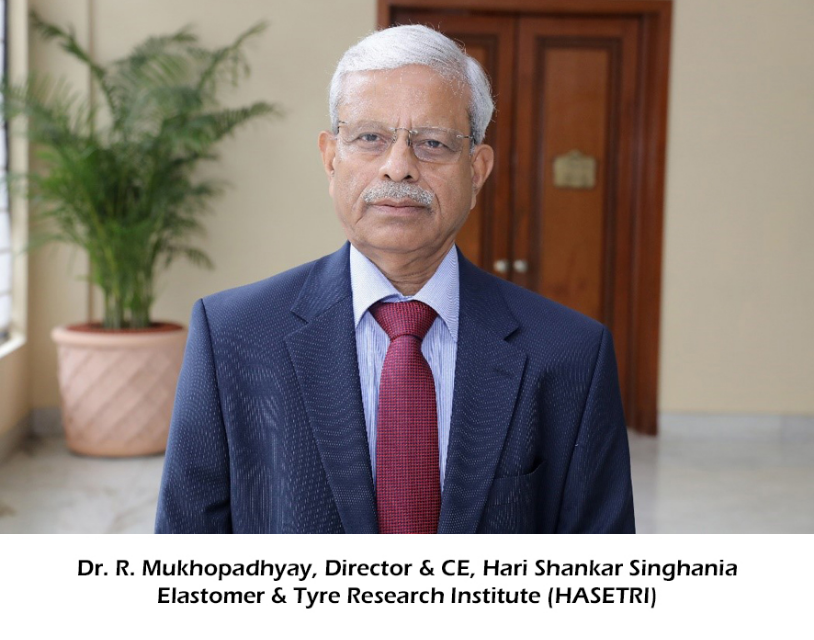
HASETRI featured in Indian/International Rubber Journal
An enlightening interview with Dr. R. Mukhopadhyay, Director & CE, HASETRI, speaks of the current situation of the Indian tire and rubber industry and how they are coping with the pandemic.

HASETRI successfully enhanced the scope of NABL accreditation
September 2021: HASETRI has successfully enhanced the scope of NABL accreditation in Wet Grip and Coast by Noise testing for Cl & C2 category tyres as per ECE R117 and proposed AIS 142.

PHD Annual Awards for Excellence Announced
HASETRI imparted training to candidates under the STAR scheme of NSDC,GOI in rubber sector(under Rubber SDC)for the job roles of mill & Tyre Building Operator-commercial vehicles. The Institute has been approved as the first training provider for rubber sector by RSDC under NSDC,GOI
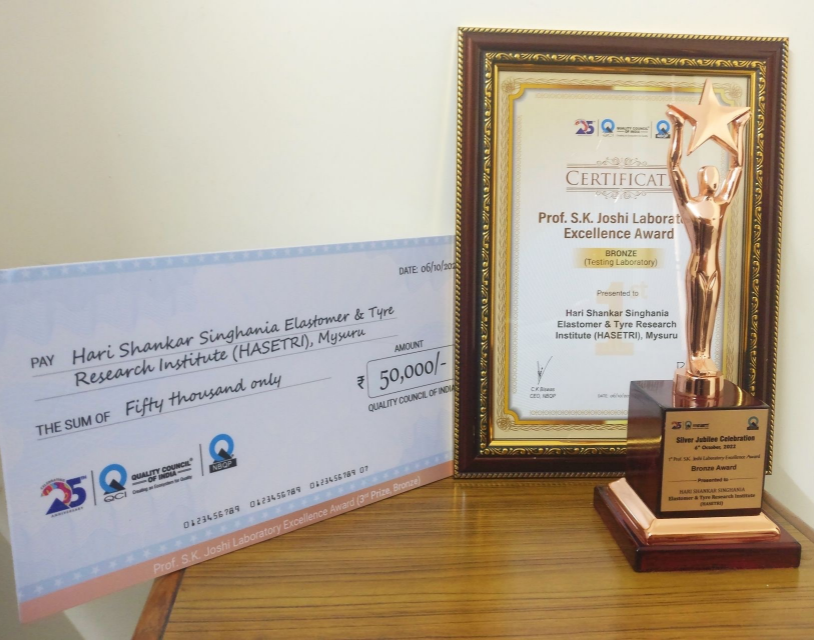
HASETRI receives the Prof. SK Joshi Laboratory Excellence Award
HASETRI received Prof. SK Joshi Laboratory Excellence Award from Quality Council of India (QCI) during their Silver Jubilee celebration held on 6th October 2022 at New Delhi. This is the first testing laboratory in private sector in India to receive this Award.

Elastomer And Tyre Research Institute