Tyre Testing Lab for Safety, Performance and Quality Assessment
A Tyre testing lab is designed to evaluate whether tyres are safe, reliable, and suitable for use across various automotive and industrial applications. The facility helps manufacturers and OEMs confirm that tyres meet technical and regulatory requirements before they are approved for vehicle use.
For tyre makers, automotive manufacturers, and rubber product companies, testing goes beyond basic approvals. It plays a critical role in understanding tyre lifespan, noise behaviour, ride comfort, and durability. These insights help guide design improvements, material selection, and product innovation.
As an independent tyre testing lab in India, HASETRI supports tyre validation across multiple vehicle segments, including passenger vehicles, commercial vehicles, two-wheelers, off-highway, and industrial tyres.
Role of tyre testing labs in vehicle safety and performance
Tyres directly influence braking, grip, stability, fuel efficiency, and noise. Because of this, tyre testing is a critical part of vehicle safety and performance validation. Common testing activities evaluate:
- ● Structural strength and endurance
- ● Rolling resistance and fuel efficiency impact
- ● Wet grip and braking behavior
- ● Pass-by noise and vibration
- ● Ageing and durability over time
Both indoor tyre testing and outdoor tyre testing are used to analyse tyre behaviour under controlled and real-world conditions. For OEMs, this data supports vehicle tuning for ride and noise. For tyre manufacturers, it improves tread design, compound selection, and construction while reducing the risk of field failures and recalls.


Why independent tyre testing matters for manufacturers and OEMs
Independent tyre testing ensures neutral, repeatable, and credible results for both domestic and export tyre products. HASETRI supports manufacturers with:
- ● Third-party validation of test results
- ● Compliance with national and international standards
- ● Audit and certification readiness
- ● Confidence in measurement accuracy
For OEMs working across Asia and Europe, independent tyre testing is essential for product approvals and global market access.
Our NABL accredited testing laboratory follows well-defined systems and quality processes aligned with global tyre testing procedures.
Regulatory Compliance and Standardized Tyre Testing Procedures
Tyre testing is closely linked to to regulatory compliance. Defined tyre testing standards determine whether a tyre can be approved for sale and usage based on safety, durability, fuel efficiency, and noise performance.
National and international tyre testing standards
- ● Indian standards such as IS and AIS
- ● UNECE regulations, including ECE R117
- ● FMVSS requirements
- ● BEE star labelling norms
Advanced Laboratory Infrastructure and Tyre Testing Equipment
The reliability of a tyre testing lab depends on advanced equipment, controlled conditions, and skilled personnel. Accurate measurement systems help generate dependable results.
Indoor tyre testing equipment and capabilities
Conclusion
A Tyre Testing Lab plays a central role in safety, compliance, and product development. It supports tyre manufacturers, OEMs, and material suppliers with reliable data for design decisions and regulatory approvals.
Independent testing, standardised methods, and accredited systems reduce risk and improve confidence in results. For organisations operating in India and global markets, this support is essential for maintaining consistent quality and achieving regulatory approval.
Beyond tyre testing, HASETRI also offers specialised elastomer testing lab services for rubber compound evaluation, material qualification, and polymer characterisation.
HASETRI supports your development and compliance needs through advanced tyre testing, validation, and regulatory support.
Frequently Asked Questions
What tyre testing standards are followed at a tyre testing lab in India?
Tyre testing labs in India follow a combination of national and international standards including IS (Indian Standards), AIS (Automotive Industry Standards), UNECE regulations such as ECE R117, FMVSS requirements, and BEE star labelling norms. HASETRI, as an NABL-accredited tyre testing lab in India, aligns all testing processes with these regulatory frameworks to support both domestic approvals and international export compliance.
What is the difference between indoor tyre testing and outdoor tyre testing?
Indoor tyre testing is conducted on controlled laboratory machines and evaluates parameters such as rolling resistance, endurance, high-speed performance, structural strength, shearography, and thermography. Outdoor tyre testing assesses real-world tyre behaviour including wet grip, braking distance, pass-by noise, vehicle dynamics, and fuel efficiency on actual road surfaces. Together, both methods provide a comprehensive picture of tyre safety, durability, and performance.
What are the standard tyre testing procedures followed before a tyre is approved?
Standard tyre testing procedures involve conditioning tyres to defined temperature and inflation pressure, mounting on approved rim sizes, and conducting tests such as plunger strength, bead unseat, dimensional verification, rolling resistance measurement, and endurance runs. These steps follow test methods defined under IS, AIS, and UNECE regulations, ensuring consistent and repeatable results accepted by domestic and international certification bodies.
Which vehicle segments can be tested at a tyre testing lab in India?
A tyre testing lab in India supports evaluation across passenger cars, two-wheelers, light commercial vehicles, heavy commercial vehicles such as trucks and buses, off-highway machinery, and industrial tyres. HASETRI's tyre testing lab provides validation and compliance support for all these segments, helping manufacturers meet the specific performance and safety requirements applicable to each vehicle category.
How does a tyre testing lab support OEM product development and vehicle tuning?
A tyre testing lab provides OEMs with measurable data on rolling noise, vibration, ride comfort, wet grip, and handling characteristics. Engineers use this data to tune tyre-vehicle interaction and make informed decisions on tread design, compound selection, and construction. Independent tyre testing also supports benchmark evaluation of competing tyres, helping OEMs validate performance targets and reduce field failure risk before market launch.
What equipment is used in a professional tyre testing lab to evaluate tyre performance?
A professional tyre testing lab uses specialised equipment including rolling resistance test machines, high-speed drum endurance machines, bead unseat test rigs, shearography and thermography systems, footprint and contact pressure mapping tools, plunger test equipment, and air retention test systems. This infrastructure supports precise evaluation of tyre durability, thermal behaviour, structural integrity, and adherence to applicable tyre testing procedures and standards.
What tests are performed in a tyre testing lab?
A tyre testing lab performs rolling resistance, wet grip, noise, endurance, strength, ageing, and regulatory tests using standardised methods.
Why is accreditation important for tyre testing?
Accreditation confirms that testing follows approved procedures and ensures results are accepted by regulators and certification bodies worldwide.
Can tyre testing data be used for export approvals?
Yes, Data from accredited tyre testing facilities is widely used for international compliance and export certification.
Highlights
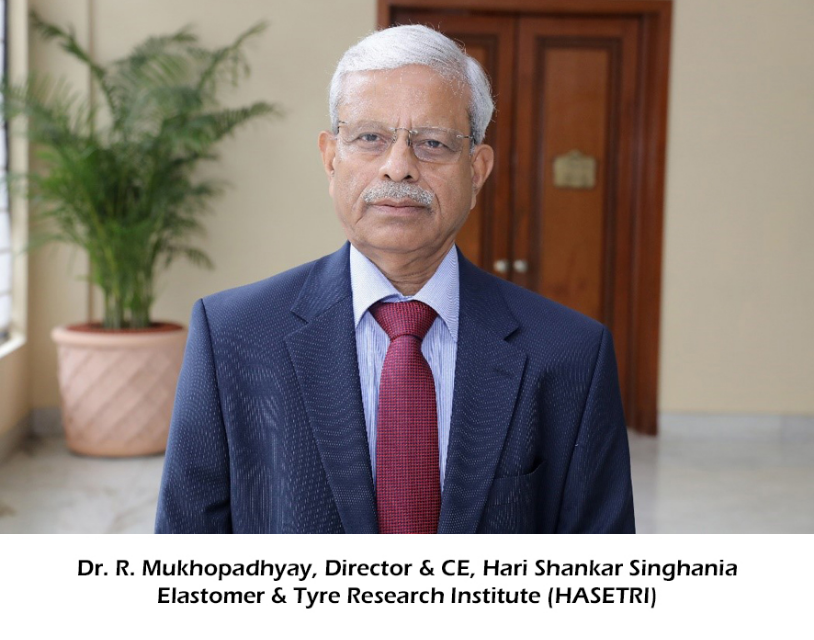
HASETRI featured in Indian/International Rubber Journal
An enlightening interview with Dr. R. Mukhopadhyay, Director & CE, HASETRI, speaks of the current situation of the Indian tire and rubber industry and how they are coping with the pandemic.

HASETRI successfully enhanced the scope of NABL accreditation
September 2021: HASETRI has successfully enhanced the scope of NABL accreditation in Wet Grip and Coast by Noise testing for Cl & C2 category tyres as per ECE R117 and proposed AIS 142.
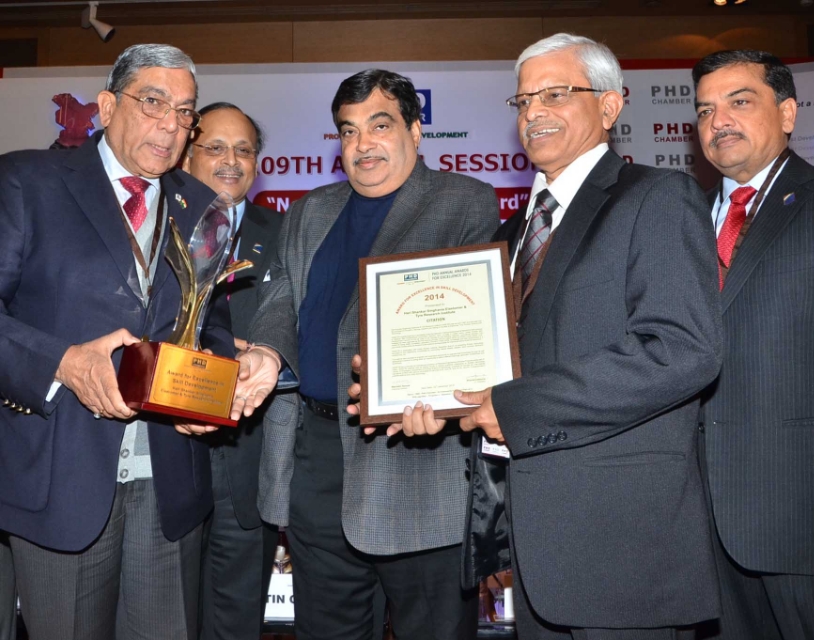
PHD Annual Awards for Excellence Announced
HASETRI imparted training to candidates under the STAR scheme of NSDC,GOI in rubber sector(under Rubber SDC)for the job roles of mill & Tyre Building Operator-commercial vehicles. The Institute has been approved as the first training provider for rubber sector by RSDC under NSDC,GOI
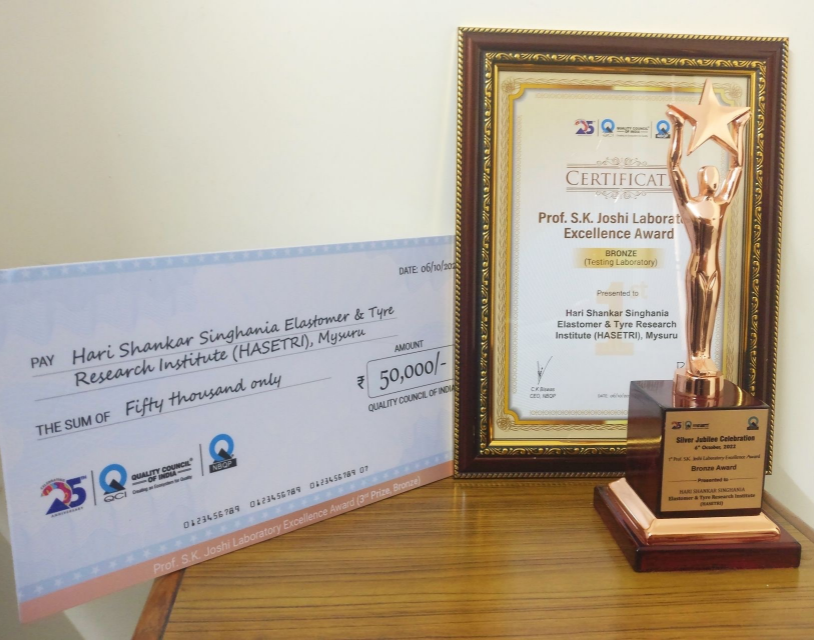
HASETRI receives the Prof. SK Joshi Laboratory Excellence Award
HASETRI received Prof. SK Joshi Laboratory Excellence Award from Quality Council of India (QCI) during their Silver Jubilee celebration held on 6th October 2022 at New Delhi. This is the first testing laboratory in private sector in India to receive this Award.

Elastomer And Tyre Research Institute