Tyre Certification Services for Regulatory Approval and Compliance
Tyre certification is the process of checking whether a tyre meets defined regulatory and safety requirements. It is done using standard test methods and documented reports. These reports are then used for approvals, audits, and market access. Many manufacturers ask what is tire certificate because the term gets used in different ways. In practice, a tyre certificate usually refers to the documented proof that a tyre has been tested against required standards and meets the limits for that market.
Tyre certification matters if you sell in regulated markets, supply to OEMs, or export. It also matters if you are applying for programmes like labelling or category-based approvals. This is why tyre testing certification in india is a common requirement for tyre manufacturers and suppliers.
Understanding Tyre Certification and Regulatory Compliance
Tyre certification links testing to regulation. A tyre is tested under defined conditions. The results are recorded in a report format that regulators and certification bodies can review.
What gets tested depends on the regulation, but the intent is usually the same:
- safety on road (grip, strength, durability)
- environmental and efficiency targets (rolling resistance, noise)
- fitment and dimensional checks (size and markings)
A tyre certification process typically includes:
- identifying the applicable regulation and tyre category
- selecting the required test set
- testing using standard procedures
- issuing reports with traceable results
- supporting review and audit requirements
If your data is not consistent, or the method is not acceptable to the authority, certification gets delayed. This is why working with an NABL accredited testing laboratory with experience in tyre certification and compliance testing becomes important.
Tyre Certification Across Different Vehicle Categories
Tyre certification requirements change by tyre type and vehicle category. A tyre for a passenger car is not evaluated the same way as a tyre for a truck or an off-highway vehicle.
Common categories include:
- passenger vehicle tyres
- light truck tyres
- commercial vehicle tyres
- two-wheeler tyres
- off-highway and industrial tyres
Each category can have different:
- load and speed conditions
- endurance expectations
- performance limits
- noise and efficiency requirements
- marking and dimensional rules
This is also where certification gets complex. A manufacturer may have multiple SKUs across categories. One tyre line may need a different compliance pathway than another. A clear mapping of category → required tests helps avoid rework.
Key Testing Areas Covered Under Tyre Certification
Tyre certification is based on defined test areas. These tests check whether a tyre meets safety, durability, and performance limits for the target category and market.
1) Dimensional and marking verification
Tyre size, section width, outer diameter, and required markings are checked. These must match approved specifications.
2) Strength and endurance testing
These tests evaluate structural integrity under load and speed. They confirm that the tyre can operate safely within its rated limits.
3) Rolling resistance evaluation
Rolling resistance affects fuel efficiency and energy loss. Many regulations set defined limits for this parameter.
4) Wet grip performance
Wet braking performance is critical for safety. This test measures how effectively a tyre performs on wet surfaces.
5) Noise measurement
Pass-by noise testing ensures that tyres meet environmental and regulatory noise limits.
Each of these test areas must be performed using standardised methods. Conditions such as load, pressure, speed, and temperature are controlled. The results are documented in a structured format for submission or audit.
If one parameter fails to meet the limit, certification may be delayed. This is why early-stage testing before formal submission is important. It helps identify gaps and avoid repeat testing.
A structured approach to tyre certification reduces uncertainty and improves approval timelines.
Rubber compounds used in tyres are also validated through our elastomer testing lab, supporting compound-level assessment alongside tyre-level certification.
Challenges Faced in Tyre Certification and Our Technical Solutions
Tyre certification often slows down due to avoidable issues. Most problems come from gaps in planning, test readiness, or documentation.
Top 5 Common challenges include:
1) Wrong test plan for the target market
A tyre may be tested, but not against the correct regulation or the correct limits. Solution: Start with a clear compliance map for the target geography and tyre category.
2) Inconsistent results across iterations
Changes in compound, tread, or construction can shift results. Solution: Use structured testing and comparisons across builds so you can see what changed and why.
3) Delays due to re-testing
This happens when conditions, methods, or reporting are not acceptable for review. Solution: Follow standardised methods and ensure results are traceable and review-ready.
4) Noise, rolling resistance, or wet grip targets are not met
These are common pain points when regulations tighten or export targets change. Solution: Use a test + improve loop. Validate, adjust, and re-validate with clear data.
5) Documentation gaps during audit or submission
Even correct testing can get held up if reports are incomplete. Solution: Maintain structured reporting and test traceability so the file is clean.
The point is simple: tyre certification goes faster when the process is planned like an engineering workflow, not like a last-minute checklist.
Benefits of Choosing a NABL-Accredited Tyre Certification Partner
A NABL-accredited partner is evaluated for competence and quality systems. This matters because certification depends on trust in the data. If your reports are questioned, timelines get hit.
Benefits of working with a NABL-accredited tyre certification partner include:
- higher confidence in test accuracy and repeatability
- better acceptance during audits and technical reviews
- stronger traceability of methods, instruments, and results
- reduced risk of avoidable re-testing
- cleaner documentation for compliance files
For manufacturers, this reduces uncertainty. For OEM supply, it also supports vendor approval and quality audits.
Professional Training for Tyre Certification and Standards
Over the last 30 years of experience to serve rubber & allied industries for achieving self-sufficiency in technology development, HASETRI has a strong believe that one of the most important parameter for the success of any organization is knowledge & skill of it’s manpower.
To enhance the knowledge & skill of your manpower, HASETRI has expertise to offer best, cost effective tailor-made workshop in rubber science & technology and advance engineering (Simulation, Vehicle Dynamics & NVH) according to company & business requirements. It also has been conducting short term courses/workshops on Polymer Science & Rubber Technology in association with IRI, CII, CIRT, ARAI etc. in different parts of India.
| Sl No | Workshop on Rubber Science & Technology | |
|---|---|---|
| 1 | Overview of Rubber Science & Technology | |
| 2 | Elastomers (General Purpose Rubber and Speciality Rubber) | |
| 3 | Rubber Ingredients - Filler | |
| 4 | Other Rubber ingredients - Vulcanizing chemicals and protective agents | |
| 5 | Reinforcing Materials -I | |
| 6 | Reinforcing Materials-II (Adhesion & Bonding) | |
| 7 | Rubber Processing Technology I - Mixing , Extrusion | |
| 8 | Rubber Processing Technology II - Calendering, Moulding | |
| 9 | Reverse Engineering of Rubber products | |
| 10 | AFM : 3D Surface topography | |
| 11 | Rubber Material Testing & Significance -I (Chemical) | |
| 12 | Rubber Material Testing & Significance -II (Physical) | |
| 13 | Manufacturing Problems / Product defects in Rubber Industry | |
| 14 | Rubber Compounding Technology | |
| 15 | Basics of Tyre Technology | |
| 16 | Quality & Safety in Rubber Industry | |
| 17 | HASETRI Laboratory Visit | |
| 18 | Rubber Product I (Conveyor Belt & V-Belt) | |
| 19 | Rubber Product II (Hose, Seals) | |
| 20 | Question - Answer / Feedback Session | |
| Sl No | Workshop on Rubber Material & Compounding | |
|---|---|---|
| 1 | Basics of Rubber Science and Technology | |
| 2 | Rubber Compounding Ingredients : Rubber & Fillers | |
| 3 | Rubber Compounding Ingredients : Vulcanizing Chemicals and Protective agents | |
| 4 | Significance of Testing | |
| 5 | Basics of Rubber Compounding Technology | |
| 6 | Reinforcing materials : Textiles | |
| 7 | Reverse Engineering | |
| 8 | Rubber Compound Design & Case Study | |
| 9 | Feedback and Conclusion | |
| Sl No | Workshop on Reverse Engineering of Rubber Products – Concepts, Tools And Techniques | |
|---|---|---|
| 1 | Compounding Ingredients | |
| 2 | Formula Reconstruction | |
| 3 | Chemical Test methods | |
| 4 | IR & NMR | |
| 5 | Thermal Analysis | |
| 6 | Chromatography | |
| 7 | Rheometric Properties | |
| 8 | Physical Test methods | |
| 9 | Reverse Engineering Concepts | |
| 10 | Case studies | |
| 11 | Question Answer Session | |
| Sl No | Workshop on Rubber Processing Technology | |
|---|---|---|
| 1 | Basics of Rubber Science and Technology | |
| 2 | Rubber Compounding Ingredients | |
| 3 | Reinforcing materials | |
| 4 | Rubber Mixing Technology | |
| 5 | Rubber Extrusion Technology | |
| 6 | Rubber Calendering Technology | |
| 7 | Rubber Moulding Technology | |
| 8 | Manufacturing Problems / Product defects in Rubber Industry | |
| 9 | Prevention, Detection & Correction of defects-Tool & Techniques | |
| 10 | HASETRI- Laboratory Visit | |
| 11 | Question - Answer / Feedback Session | |
| Sl No | Workshop on Life Prediction & Failure Analysis of Elastomer | |
|---|---|---|
| 1 | Basics of Rubber Science and Technology | |
| 2 | Different Type of Service Failure of Rubber Products | |
| 3 | Systematic Forensic Analysis of Failed Rubber Product | |
| 4 | Case Studies on Service Failed Rubber Product | |
| 5 | Life prediction and accelerated testing | |
| 6 | HASETRI- Laboratory Visit | |
| 7 | Question - Answer / Feedback Session | |
| Sl No | Workshop on Finite Element Analysis of Elastomer | |
|---|---|---|
| 1 | Rubber materials and compounds. | |
| 2 | Rubber as an engineering material and its uniqueness. | |
| 3 | Rubber elasticity. | |
| 4 | Rubber Material Models. | |
| 5 | Testing for material modelling. | |
| 6 | Fitting of test data. | |
| 7 | Basics of non-linear FEA. | |
| 8 | FE modelling and analysis techniques. | |
| 9 | Applications and examples. | |
| 10 | HASETRI- Laboratory Visit | |
| 11 | Question - Answer / Feedback Session | |
| Sl No | Workshop on Vehicle Dynamics & NVH | |
|---|---|---|
| 1 | Introduction to Vehicle Dynamics | |
| 2 | Role of Tyre Assesing Vehicle Ride & Handling | |
| 3 | Tyre Inouse & Outdoor Parameters Extraction - F & M, RR, Stiffness | |
| 4 | Hands on Experience with ADAMS, ABAQUS for evaluating F&M, RR & Stiffness | |
| 5 | Introduction to NVH | |
| 6 | Role of Tyre Assesing Vehicle Noise / Pass by performance | |
| 7 | Tyre Inouse & Outdoor Parameters Extraction - SPL vs Freq, Tyre Modes | |
| 8 | Hands on experience with FEA software - ABAQUS for tyre modalanalysis | |
| 9 | Demonstration of Parameter Extraction for Vehicle Dynamics & NVH at HASETRI Lab | |
| 10 | HASETRI- Laboratory Visit | |
| 11 | Question - Answer / Feedback Session | |
| Sl No | Workshop on Tyre Testing | |
|---|---|---|
| 1 | Introduction – History of Tyre , Role of tyre in a automobile | |
| 2 | Tyre Classification & Design Parameter | |
| 3 | Static Tyre Testing-1 (Dimension Analysis, Foot print, Static Stiffness – Kx, Ky, Kz and Torsional ) | |
| 4 | Static Tyre Testing-2 (Plunger Energy Test, Shearography, Inflation Pressure Loss, Electrical Resistance Test) | |
| 5 | Dynamic Tyre Testing-1 (Endurance Test , Bead Unseating, Rolling Resistance Test) | |
| 6 | Dynamic Tyre Testing-2 (Force & Moment Test , Ply Steer Residual Aligning Torque, Uniformity) | |
| 7 | Tyre Standards & Regulations | |
| 8 | Tyre Safety, durability and failure analysis | |
| 9 | HASETRI- Laboratory Visit | |
| 10 | Question - Answer / Feedback Session | |
| Sl No | Workshop on Calibration- Tools & Techniques | |
|---|---|---|
| 1 | Basics of Measurement and Calibration | |
| 2 | Tracebility and Inter-comparison | |
| 3 | Quality Standards and Importance of Calibration | |
| 4 | Weight, Weighing Balance & Volume Measurement & Calibration Techniques | |
| 5 | Pressure Calibration Techniques | |
| 6 | Temperature sensors Calibration | |
| 7 | Force Calibration Techniques for testing machines | |
| 8 | Assessment of Measurements Uncertainty | |
| 9 | Question - Answer / Feedback Session | |
| Sl No | Seminar on Vibration and Acoustics Engineering – Introduction and Industrial applications | |
|---|---|---|
| 1 | Introduction to Vibrations | |
| 2 | Vibration Measurements – Sensors & Instrumentatio | |
| 3 | Review of DSP basics | |
| 4 | Theory: Vibration Signal (Signature Testing) Analysis | |
| 5 | Demonstrations: Signature Testing & Analysis | |
| 6 | Theory: Modal Testing and Analysis | |
| 7 | Demonstrations: Modal Testing and Analysis | |
| 8 | Introduction to Acoustics | |
| 9 | Acoustic Measurements – Sensors & Instrumentation | |
| 10 | Role of Elastomeric materials in NVH for both Automotive & non- Automotive industries | |
| 11 | Theory: Sound Pressure, Sound Intensity, and Sound Power | |
| 12 | HASETRI facility Demonstrations: Sound Pressure, Sound Intensity & Sound Power | |
| 13 | Advanced Acoustics – Sound Quality Engineering and Demo | |
| 14 | Advanced Acoustics – Sound Source Localization and Demo | |
| 15 | Advanced Acoustics – Transfer Path Analysis and Demo | |
| 16 | Recent trends in Noise & Vibration Simulations | |
| 17 | Vibration & Acoustics: Applications & Case Studies | |
| 18 | Closing session –Q&A, Feedback etc. | |
| Sl No | Training on Legislation & Regulation for Rubber Products | |
|---|---|---|
| 1 | Different Requirement & Legislation-Brief | |
| 2 | REACH | |
| 3 | Tyre Labelling | |
| 4 | ELV Requirements | |
| 5 | Directive on Usage of Oil in Rubber Compound | |
| 6 | Directive on Heavy Metal Contents in Compound | |
| 7 | Future Requirements with Respective to Regulation & Legislation | |
| 8 | Question - Answer / Feedback Session | |
| Sl No | Training on Laboratory Quality Management System as per ISO/IES 17025:2005 | |
|---|---|---|
| 1 | Quality Management System—Fundamentals and Vocabulary | |
| 2 | Understanding of Clauses - Impartiality (4.0) - Confidentiality (4.0) | |
| 3 | Resource requirements (6.0) Process Requirement (7.0) Management Requirements (8.0) Responsibility & Authority of Quality Manager / Technical Manager | |
| 4 | Change in 2017 version over 2005 version Difference between Intralaboratory correlation & ILC | |
| 5 | Risk Analysis & Control Process Internal Audit & Management Review | |
| 6 | Understanding non-conformity & associated Risk | |
| 7 | Question - Answer / Feedback Session | |
| Sl No | Measurement Uncertainty in the field of Testing | |
|---|---|---|
| 1 | Introduction to Measurement Uncertainty & its Importance | |
| 2 | Specify the Measurand & Sources of Uncertainty | |
| 3 | Quantify Sources of Uncertainty | |
| 4 | Characterize Sources of Uncertainty | |
| 5 | Calculate the Combined Uncertainty | |
| 6 | Calculate the Expanded Uncertainty | |
| 7 | Evaluate Your Uncertainty Budget | |
| 8 | Reporting Uncertanity | |
| 9 | Case Studies | |
| 10 | Question - Answer / Feedback Session | |
Reach out to start your tyre certification plan and testing schedule.
Frequently Asked Questions
What is BIS certification for tyres?
BIS certification refers to approval from the Bureau of Indian Standards confirming that a tyre meets the applicable Indian Standard (IS) specification. For many tyre categories sold in India, this certification is required before market entry.
What tests are part of the tyre certification process?
Common tests include dimensional and marking checks, strength and endurance testing, rolling resistance evaluation, wet grip performance, and noise measurement. The exact test set depends on the tyre category and the applicable regulation.
How long does tyre certification usually take?
Timelines vary depending on the tyre category, the number of tests required, and how complete the documentation is. Working with an accredited lab and validating test readiness early helps avoid avoidable delays.
What is tyre certification?
Tyre certification is the process of testing a tyre against regulatory standards and issuing documented results for compliance and approvals.
What is tire certificate?
A tire certificate is the proof document that shows a tyre meets specific test and compliance requirements for a market or customer.
Is tyre testing certification in India required for all tyres?
It depends on the category and where the tyre will be sold or supplied. Many regulated routes require certification and documented test results.
What causes delays in tyre certification?
Wrong test selection, inconsistent results, and documentation gaps are common reasons. A clear test plan reduces delays.
Can one test report be used for multiple markets?
Sometimes yes, sometimes no. Requirements differ by region and regulation. It’s safer to map requirements first.
Highlights
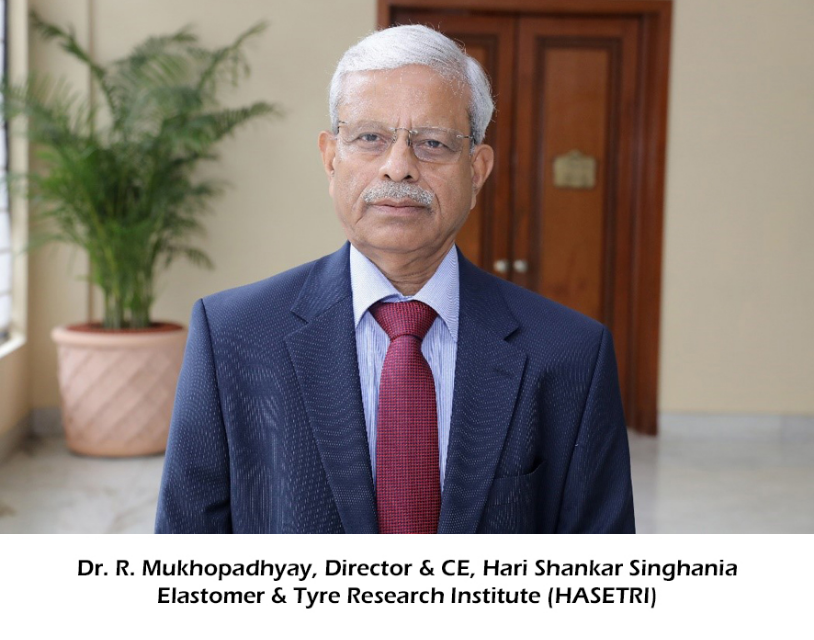
HASETRI featured in Indian/International Rubber Journal
An enlightening interview with Dr. R. Mukhopadhyay, Director & CE, HASETRI, speaks of the current situation of the Indian tire and rubber industry and how they are coping with the pandemic.
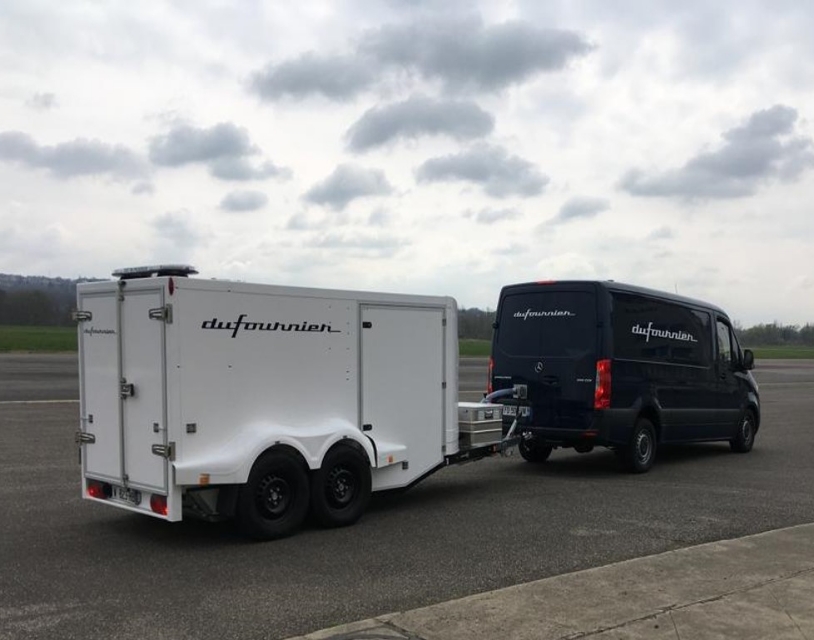
HASETRI successfully enhanced the scope of NABL accreditation
September 2021: HASETRI has successfully enhanced the scope of NABL accreditation in Wet Grip and Coast by Noise testing for Cl & C2 category tyres as per ECE R117 and proposed AIS 142.
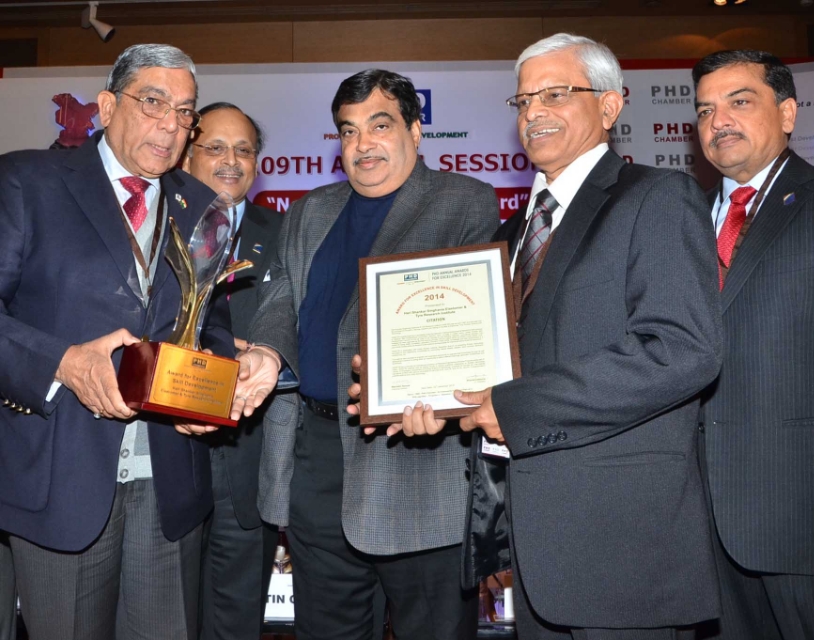
PHD Annual Awards for Excellence Announced
HASETRI imparted training to candidates under the STAR scheme of NSDC,GOI in rubber sector(under Rubber SDC)for the job roles of mill & Tyre Building Operator-commercial vehicles. The Institute has been approved as the first training provider for rubber sector by RSDC under NSDC,GOI
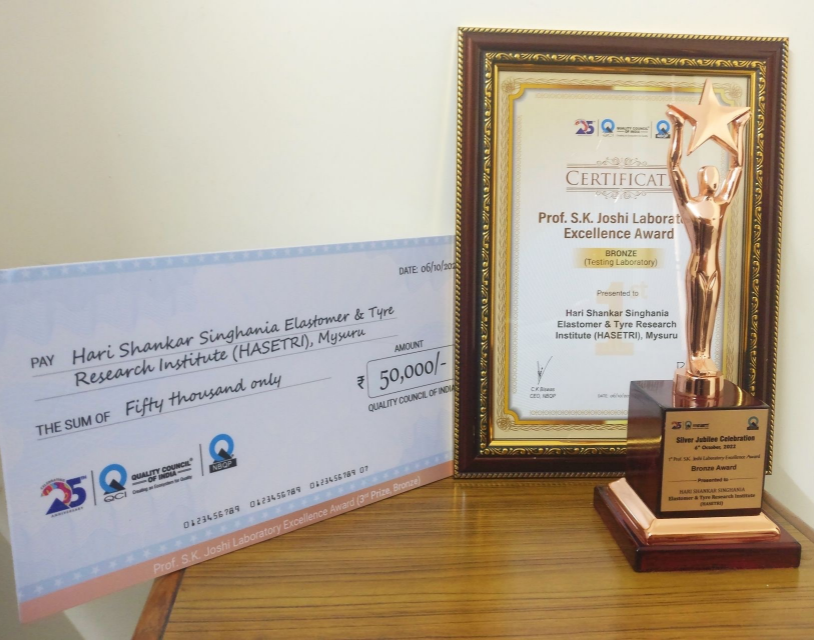
HASETRI receives the Prof. SK Joshi Laboratory Excellence Award
HASETRI received Prof. SK Joshi Laboratory Excellence Award from Quality Council of India (QCI) during their Silver Jubilee celebration held on 6th October 2022 at New Delhi. This is the first testing laboratory in private sector in India to receive this Award.

Elastomer And Tyre Research Institute